


Key takeaways
- Payment doesn't confirm full compliance: A claim may pass RAMQ’s initial controls and still be reviewed later against the applicable billing agreement.
- Automated validation happens before payment: RAMQ checks patient eligibility, physician information, billing codes, contextual details, deadlines and code compatibility.
- Monitoring continues after claims are processed: Statistical analysis, peer comparisons and anomaly detection help RAMQ identify billing patterns that may require closer review.
RAMQ evaluates medical billing claims through automated validation, administrative controls and post-payment monitoring. A claim may be paid as submitted, modified, rejected or returned for correction. Even after payment, RAMQ can review the claim to confirm that the service, billing code and supporting documentation comply with the applicable agreement.
For Quebec physicians, submitting a claim seems like the final step in the billing process.
You document the encounter, select the appropriate code, enter the required information, and send the claim for processing.
But claim submission is only one stage of RAMQ billing.
It also continues to analyze claims after payment, which means acceptance during initial processing should not be interpreted as a permanent confirmation that every billing requirement was met.
- From RAMQ’s perspective: They must determine whether the information provided satisfies the rules established under Quebec’s health insurance framework and the physician’s applicable agreement.
Understanding this process allows physicians to prepare stronger claims. Providers identify errors sooner and maintain the records needed to respond confidently if RAMQ requests more information.
What information does RAMQ receive with a medical billing claim?
The evaluation process begins with the information submitted by the physician or their authorized billing agent.
Depending on the service, a claim may include:
- The physician’s billing number
- The patient’s health insurance number or alternate payer information
- The date and location of the service
- One or more billing codes
- Modifiers or contextual elements
- Referring physician information, when applicable
- Additional details required for the billed act
Each element contributes to how RAMQ processes the claim. A valid billing code alone may not be sufficient. The patient, physician, service location, date and accompanying details must also meet the relevant requirements.
Missing or incompatible information results in refusals, delay or request for correction.
|
Starting to bill as a Quebec physician? Receive what you’ve earned. |
Step 1: RAMQ performs automated claim validation
Before issuing payment, RAMQ applies automated controls to the submitted information.
These controls verify:
- Whether the patient was eligible for the insured service
- Whether the physician’s billing number was valid
- Whether the billing code was active and applicable
- Whether required contextual information was included
- Whether the claim was submitted within the permitted time limit
- Whether multiple codes can be billed together
- Whether a premium, modifier or supplement applies
The general submission deadline is 90 days from the date of service, although physicians should confirm the rules that apply to their specific situation.
RAMQ’s automated validation also evaluates relationships between claim elements. A code may be valid on its own but incompatible with another code, location, compensation arrangement or contextual detail.
Claims that fail these controls may be rejected, suspended or returned for correction before payment.
Step 2: RAMQ determines how the claim will be processed
Following initial validation, RAMQ may process a claim in several ways:
- Pay it as submitted
- Pay it with modifications
- Reject it
- Return it for correction
The result appears on the physician’s État de compte, or account statement. This document is a key part of the billing cycle because it shows what RAMQ processed, which amounts were paid, and which claims require further attention.
Physicians should review their statements consistently instead of assuming that submission led to the expected payment.
A claim could be adjusted, and a refusal may contain an explanatory code that identifies missing information or another issue requiring correction.
Prompt reviews also help physicians detect recurring problems. If the same contextual element is repeatedly omitted, for example, correcting the underlying workflow limits errors that affect additional claims.
Step 3: RAMQ continues monitoring after payment
One of the most important points for physicians to understand is this: RAMQ’s evaluation doesn't necessarily end when a claim is paid.
RAMQ may continue analyzing billing activity through:
- Statistical analysis
- Trend monitoring
- Comparisons with physicians in the same specialty
- Reviews of procedure frequency
- Annual billing-volume analysis
- Automated anomaly detection
This monitoring generally occurs in the background.
However, an unusual pattern or abnormal payment may lead RAMQ to examine certain claims more closely. A claim that passed automated validation can raise questions when viewed within a broader pattern of activity.
Note: A difference from peer billing doesn't automatically mean that an error occurred. Practice environments, patient populations and clinical responsibilities vary. It may, however, prompt RAMQ to request documentation that explains and supports the services billed.
Step 4: RAMQ may conduct an administrative review or audit
When RAMQ identifies a claim or billing pattern that requires clarification, it may ask the physician for additional information.
Requests often include:
- Medical records
- Clinical notes
- Supporting documentation
- Information explaining the billed service
The purpose is to assess whether the billing complies with the relevant agreement. Receiving a request doesn't, by itself, indicate wrongdoing. It means RAMQ requires more information to complete its assessment.
Documentation becomes especially important at this stage. The record should establish that the service occurred, explain why it was clinically appropriate, and support the code or billing elements submitted.
Clear notes decrease ambiguity months or years after the original patient encounter, when the physician may no longer remember every detail independently.
|
99% of physicians who try Xacte, stay with Xacte. |
What can RAMQ conclude after a review?
Following its review, RAMQ determines the state of your claim and any next steps.
Its determinations include:
- Compliant: No further action.
- Non-compliant: Service was provided but billed incorrectly.
- Not medically required: Services were performed more frequently than justified.
- Incorrectly described: Service provided doesn't match the billing code used.
- Non-insured: Service isn't covered under the Health Insurance Act.
- Not provided: Insufficient evidence that the billed service was actually performed.
Depending on the findings, RAMQ may request corrections, recover an overpayment, or refer the matter for further review. More serious cases may be transferred to its investigations branch.
The central distinction is that payment and compliance aren't identical. RAMQ pays approximately 99% of claims as submitted, but claims can still be selected for review later.
How can physicians improve RAMQ claim accuracy?
No workflow guarantees that every claim will be accepted. Physicians can, however, establish habits that reduce preventable errors and make future reviews easier to manage.
Submit claims promptly while the encounter details are still accessible. Ensure that the chosen code reflects the service documented and include every required contextual element.
- Tip: Review RAMQ account statements regularly so refused or modified claims are addressed before deadlines pass.
Most importantly, maintain complete clinical records. Documentation should support the nature, timing, and medical relevance of billed care.
Physicians should also seek reliable guidance when a rule is unclear. Assumptions become repeated billing habits, allowing one misunderstanding to affect many claims over time.
Also see: 6 RAMQ medical billing best practices to increase revenue
Make your RAMQ billing sustainable
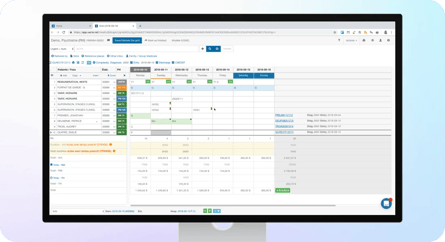
RAMQ claim management extends from the initial patient encounter through submission, payment reconciliation and possible post-payment review.
Xacte empowers physicians to manage revenue cycles with specialized RAMQ billing workflows and claim validation tools supported by Quebec-based experts.
- Access billing expertise that interprets unfamiliar situations and addresses potential issues before they become established patterns.
When you combine accurate documentation with a consistent billing process, you’ll spend less time correcting problems and approach RAMQ claim management confidently.
|
Trust RAMQ experts based in Quebec: |
FAQs: How RAMQ evaluates medical billing
Does RAMQ review every medical billing claim manually?
No. RAMQ uses automated controls to validate claim information before payment. Certain claims or billing patterns may later receive administrative review if additional clarification is required.
What does RAMQ check before paying a claim?
RAMQ may verify patient eligibility, the physician’s billing number, the validity and compatibility of billing codes, required contextual information, submission deadlines and eligibility for applicable premiums or modifiers.
Does a paid RAMQ claim mean the billing was correct?
Not necessarily. Payment means the claim passed the controls applied during initial processing. RAMQ may still review the claim later to determine whether it complies with the applicable billing agreement.
Why might RAMQ request a physician’s clinical notes?
RAMQ may request notes or other records to confirm that the billed service was provided, medically justified and correctly represented by the submitted billing code.
What happens when RAMQ finds a billing error?
The outcome depends on the finding. RAMQ may request a correction, recover an overpayment, close the file without action or refer the matter for additional review.
How do physicians reduce the likelihood of RAMQ claim refusals?
Physicians submit claims promptly, select codes carefully, include all required information, maintain documentation that supports each service and review their RAMQ account statements regularly.